



FAO and IGAD Issue Urgent Call to Prevent Rift Valley Fever Outbreak in East Africa
While mobile phones undoubtedly provide countless benefits and conveniences, their excessive and improper use brings with it a variety of negative effects and challenges that are often overlooked.

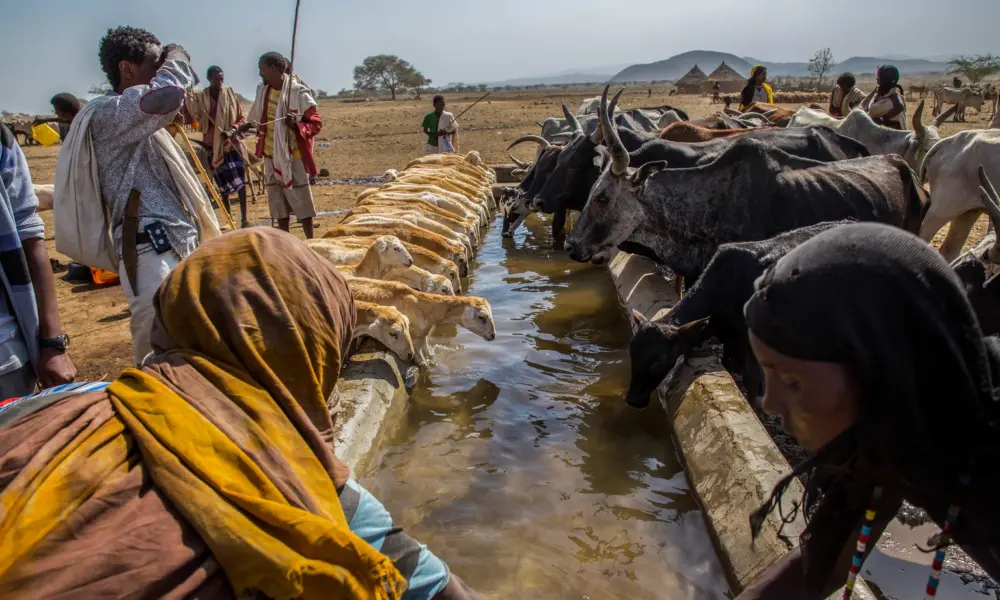
The Food and Agriculture Organization (FAO) of the United Nations, in collaboration with the Intergovernmental Authority on Development (IGAD), has urgently called for immediate action to avert the looming threat of a Rift Valley Fever (RVF) outbreak in East Africa.
RVF, a severe vector-borne viral disease, has been detected in various animal species, including sheep, goats, cattle, buffalos, camels, and humans. It spreads primarily through mosquitoes and the movement of animals.
In a joint statement, FAO and IGAD highlighted that RVF outbreaks can have devastating consequences to livestock production and humans thus posing significant risks to livelihoods, national and international markets, and human health.
In humans, RVF manifests as an acute influenza-like illness characterized by fever, rigor, headache, severe muscle and joint pain, vomiting, photophobia, and anorexia while in livestock especially for calves under ten days of age may succumb to the disease within 20-24 hours with minimal premonitory signs. Notable symptoms include sero-sanguineous nasal and lachrymal discharges, an elevated respiratory rate, and a temperature ranging from 41.5-42°C.
The repercussions of RVF outbreaks extend to the livestock sector, disrupting it by depleting livestock populations and posing a significant socioeconomic and food security threat to vulnerable households.
The risk of RVF occurrence in East Africa is deemed high, both in animals and humans, due to favorable environmental conditions and the movement of potentially infected animals. The current El Niño rains further exacerbate the risk by providing optimal environmental conditions for the amplification of RVF vectors.
FAO and IGAD have issued recommendations emphasizing the need for national veterinary authorities to increase awareness about the disease, assess the current situation, evaluate specific risks to the country regarding RVF, and identify proactive measures to enhance preparedness for potential outbreaks.
Highlighting recent incidents, in 2021, the World Health Organization reported RVF outbreaks in Kenya, affecting humans in Isiolo and Mandera counties and animals in Isiolo, Mandera, Murang’a, and Garissa counties.
The outbreak in Uganda was confirmed in December 2022 when cases of abortion in cows were reported at a farm in Kashari, Rwanyamahembe, Mbarara District.
The urgent call by FAO and IGAD underscores the critical need for coordinated efforts to prevent and manage the potential RVF crisis in East Africa.



No Comment! Be the first one.