



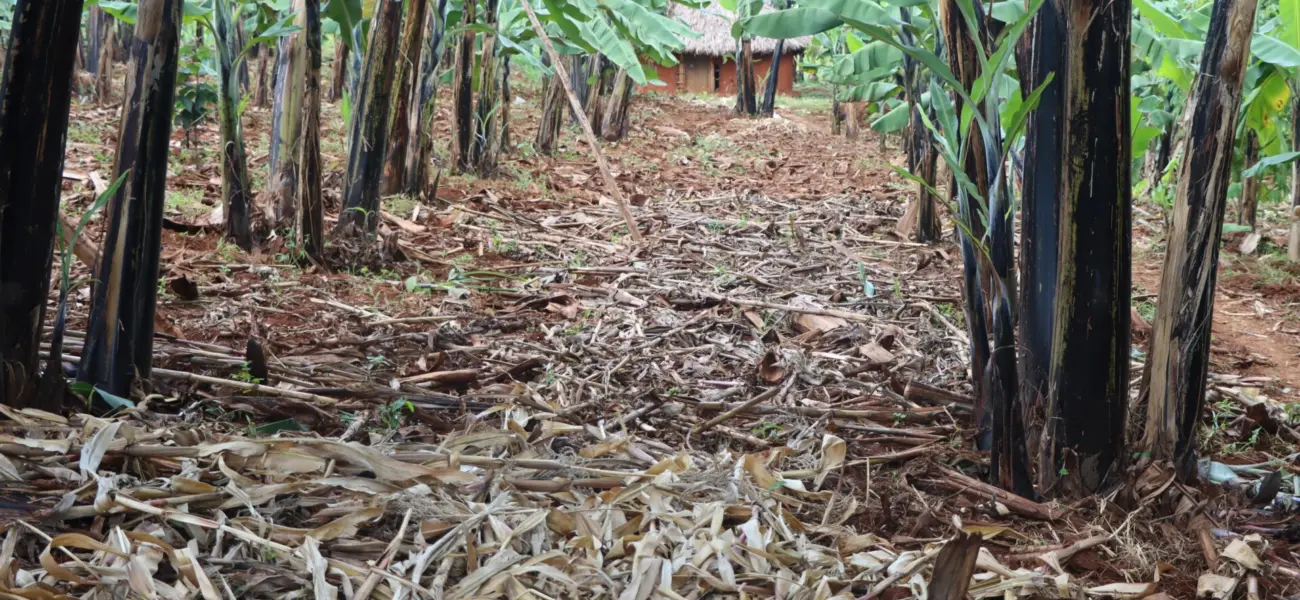
Reviving Africa’s Soils through Regenerative Agriculture
While mobile phones undoubtedly provide countless benefits and conveniences, their excessive and improper use brings with it a variety of negative effects and challenges that are often overlooked.

In a world fraught with climate challenges and food insecurity, Africa stands at a crossroads. Unsustainable farming practices, climate change, and extreme weather events have taken a toll on the continent’s soils, leading to a vicious cycle of degradation. Western farming techniques, once profitable, now require increasing inputs to salvage barren, eroded land.
This crisis extends to livestock and soil management, driving up agriculture’s carbon footprint and causing immense human suffering, with an estimated 228 million Africans facing chronic hunger. However, a beacon of hope emerges in the form of regenerative agriculture.
Regenerative practices could offer Africa a path towards a sustainable future. It offers a glimmer of hope for Africa’s agricultural sector. Conservative estimates suggest that by 2040, these practices could increase yields by 13% while generating five million new full-time jobs.
More significantly, if 50% of Africa’s farms embraced regenerative techniques, the carbon benefits alone could equate to a staggering 4.4 gigatonnes of carbon dioxide equivalent, nearly ten times South Africa’s annual emissions. This offers not only environmental benefits but also economic and social progress.
A vicious cycle of unsustainable farming practices is at the core of Africa’s soil degradation. Traditional Western techniques, which may have been productive for decades, are no longer sufficient to combat the damage. The need for constant inputs to restore barren and eroded soil is financially and ecologically unsustainable.
Livestock and poor soil management contribute to the carbon footprint of African agriculture, which is both an environmental catastrophe and a source of human misery. Chronic hunger affects millions, and climate change-related extreme weather events worsen the situation.
Numerous initiatives and projects are dedicated to addressing Africa’s farming crisis.
Regenerative agriculture is emerging as a crucial solution, supported by philanthropic foundations, corporate interventions, and international organizations. A report from the International Union for Conservation of Nature (IUCN) and Vivid Economics suggests that regenerative agriculture could be worth $70 billion to African farmers. The report highlights how practices such as agroforestry and improved soil management can enhance human nutrition, livelihoods, and ecosystem health.
Africa’s farming and environmental challenges are formidable, but regenerative agriculture provides a beacon of hope. The adoption of regenerative practices offers the continent a path toward sustainable farming, economic growth, and climate resilience.


No Comment! Be the first one.